

The Secret to a Smoother Trip? Preparing the Essentials Before You Leave
The secret to a smoother trip is simple: prepare your essential travel items before you leave, including your passport, insurance, documents, medications, carry-on, chargers, local currency, and travel-size hygiene products.
That is the clear answer. A trip feels calmer when the important details are not scattered across drawers, inboxes, wallets, and last-minute packing lists. Whether you are heading to the colorful streets of Colombia, the historic cities of Spain, the beaches of Mexico, the markets of Peru, or the romantic cafés of France, the experience begins before you ever arrive.
Travel should feel exciting, not overwhelming. But even the most beautiful journey can feel stressful when someone cannot find a passport, forgets a charger, leaves medication in a checked bag, or has no copy of an important document.
That is why pre-trip organization matters.
According to the U.S. Department of State, travelers should check passport expiration dates early, gather required travel documents, and make multiple copies in case originals are lost or stolen while traveling. The State Department also notes that some countries, especially in Europe, may require a passport to be valid for at least six months after travel dates.
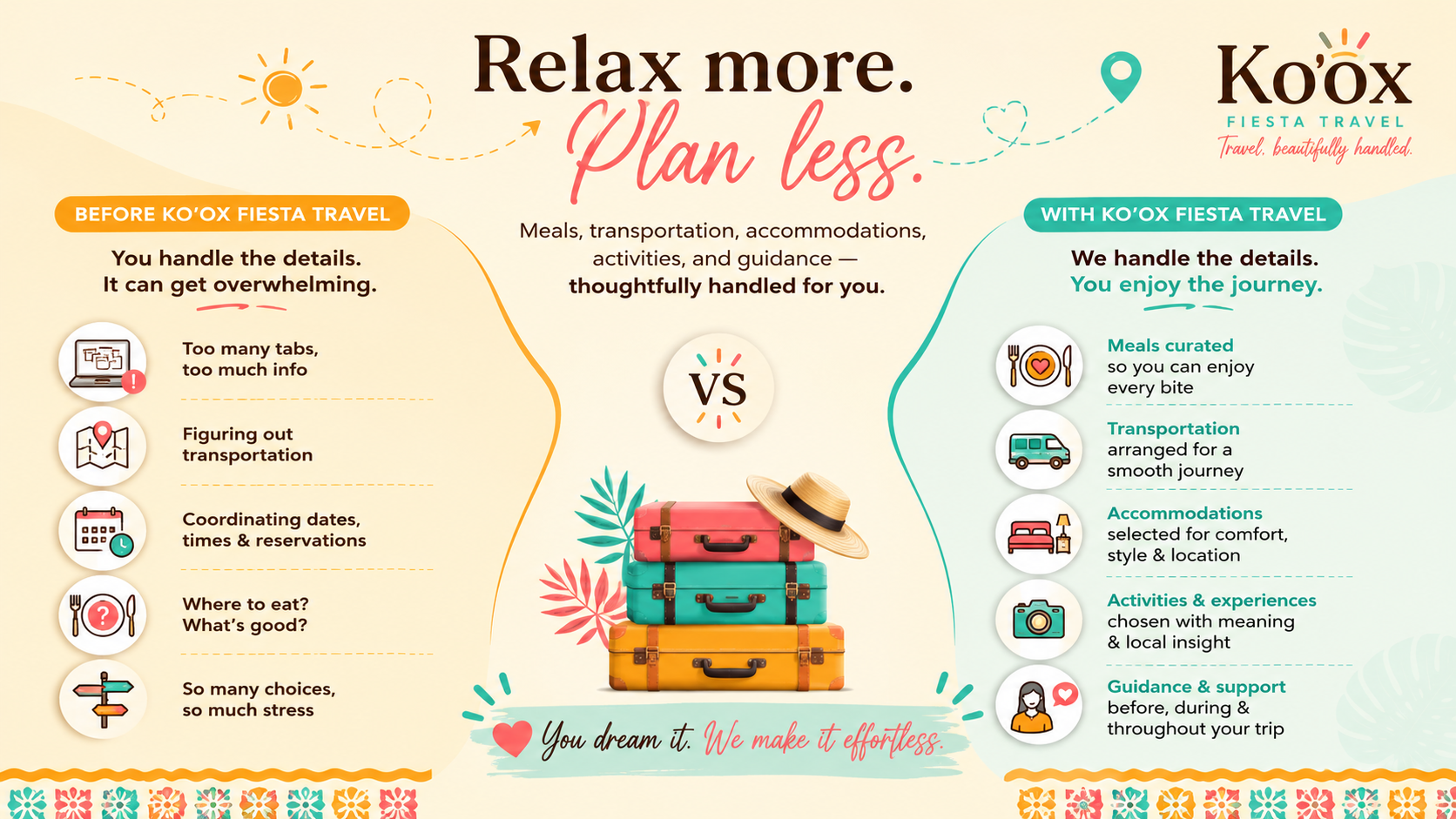
At Ko’ox Fiesta Travel, we believe the best trips leave room for joy: the first bite of local food, the music in a plaza, the view from a historic overlook, the family photo everyone will treasure, and the quiet moment when you realize you are exactly where you hoped to be. Preparing the essentials ahead of time helps protect that feeling.
Why Pre-Trip Organization Matters
Most travel stress does not come from the destination itself. It often comes from the small things that were not handled before departure.
A missing document can slow down check-in. A forgotten charger can make it harder to access boarding passes or confirmations. A medication packed in checked luggage can become a problem if the suitcase is delayed. A full-size liquid in a carry-on can create issues at airport security.
These details may seem small, but they can affect the first hours of your trip.
There is also a practical reason to pack thoughtfully. SITA’s 2025 baggage report found that 33.4 million bags were mishandled globally in 2024, even though the mishandling rate improved to 6.3 bags per 1,000 passengers. That does not mean you should panic about checking luggage. It simply means your most important items should travel with you, not separately from you.
The goal is not to overpack. The goal is to prepare with intention.
Your Simple Pre-Trip Organization Checklist
Use this checklist a few days before your trip, then review it again the night before departure.
1. Passport and Travel ID
Start with the most important item: your passport or travel identification.
Before an international trip, check your passport expiration date as early as possible. Some destinations require extra validity beyond your travel dates, and airlines may deny boarding if your passport does not meet destination requirements.
Keep your passport somewhere safe, but easy to access on travel day. Do not place it deep inside checked luggage or in a bag that might be separated from you.
For smoother organization, prepare:
Passport
Driver’s license or state ID
Visa or entry authorization, when required
A printed copy of your passport information page
A digital copy stored securely on your phone or cloud storage
For families and groups, have each traveler check their own passport, but assign one person to remind everyone of the deadline. This is especially helpful for family trips, heritage travel, and small-group experiences where one missing document can affect the whole group.

2. Travel Insurance Information
Travel insurance is one of those things travelers hope they never need, but are grateful to have when something unexpected happens.
The U.S. Department of State states that the U.S. government does not pay medical costs for U.S. citizens traveling abroad and recommends planning ahead for hospital visits, emergencies, or unexpected expenses. It also explains that travel health insurance, medical evacuation insurance, and trip cancellation insurance serve different purposes, so travelers should review policies carefully.
Before you leave, save:
Travel insurance policy number
Emergency assistance phone number
Medical coverage details
Trip cancellation or interruption details
A printed copy of your policy summary
A digital copy in your travel folder
This is especially important for international trips, multi-country Europe travel, family travel, and celebration trips where several reservations may be connected.

3. Important Travel Documents
Your travel documents are your trip’s paper trail. When everything is organized, you are not searching through old emails at the airport or trying to remember which confirmation went with which activity.
The State Department recommends gathering required travel documents and making multiple copies, including keeping copies separate from originals and leaving a set with someone trusted.
Organize these items before departure:
Flight confirmations
Hotel or lodging confirmations
Tour or activity confirmations
Transportation details
Travel insurance documents
Emergency contacts}
Copies of passports and IDs}
Entry requirements or visa confirmations, when applicable
Reservation numbers
Important addresses
A helpful tip: create one digital folder called “Trip Documents.” Add PDFs, screenshots, and confirmation emails. Then make sure key items are available offline, because airport Wi-Fi, international roaming, and rural connections are not always reliable.
For group travel, share the essentials with everyone who needs them. Not every traveler needs every private document, but the group should know the general itinerary, meeting points, and emergency contacts.
4. Medications and Health Essentials
Medications should always be packed with care.
The CDC recommends packing medications in a carry-on in case luggage is lost or delayed. The CDC also advises travelers to keep medicines in their original, labeled containers and bring enough for the entire trip, plus extra in case of travel delays.
Before you leave, prepare:
Daily prescription medications
Over-the-counter basics you commonly use
Copies of prescriptions
Glasses or contact lenses
Basic first-aid items
Motion sickness items, if needed
Any destination-specific health items recommended by a healthcare provider
For international travel, check whether your medication is allowed in the country you are visiting. The State Department notes that some prescription and over-the-counter medications legal in the United States may not be legal in other countries.
This step is not about packing a full medicine cabinet. It is about making sure your personal essentials are with you, labeled, and easy to find.

5. Carry-On Must-Haves
Your carry-on is your safety net.
Even when checked luggage arrives perfectly, your carry-on helps you move through the travel day with more comfort. And if your bag is delayed, your carry-on can help you get through the first day without feeling completely unprepared.
Pack these items in your carry-on:
Passport and ID
Wallet and payment cards
Travel documents
Medications
Phone and charger
Portable charger
Headphones
A change of clothes
Light sweater or scarf
Basic toiletries
Snacks
Reusable water bottle, empty before security
Glasses, contacts, or personal comfort items
For longer flights, add anything that helps you arrive feeling more refreshed: lip balm, moisturizer, eye mask, socks, or a small notebook for travel notes.
This is especially helpful when traveling for a special celebration, family reunion, honeymoon-style escape, cultural tour, or once-in-a-lifetime heritage trip. You want to arrive ready to enjoy the moment, not worried about missing basics.
6. Chargers, Adapters, and Tech Essentials
A phone is more than a phone when you travel. It may hold your boarding pass, maps, confirmations, translation tools, photos, payment apps, and family group chat.
Before your trip, gather:
Phone charger
Portable charger
Camera charger
Tablet or laptop charger, if needed
International plug adapter
Charging cables for each device
Power bank, if permitted by airline rules
Earbuds or headphones
For international travel, check the plug type used in your destination. Portugal, France, Spain, Peru, Colombia, and Mexico may not all use the same plug type or voltage situation for every device, so review your specific destination before packing.
A small pouch for cords can make a big difference. No one wants to untangle chargers at the bottom of a backpack while boarding is already in progress.

7. Local Currency and Payment Cards
Even in destinations where cards are widely accepted, it can be helpful to have a small amount of local currency for arrival-day needs.
Think about taxis, tips, markets, small cafés, restrooms, local vendors, or rural stops where card payments may not be convenient. This is especially useful for culturally immersive travel, where some of the most memorable moments happen in local markets, family-run shops, small food stands, or historic town centers.
Before you leave:
Notify your bank or card provider, when needed
Bring at least one backup payment card
Keep emergency cash separate from your main wallet
Research the local currency
Avoid carrying all money in one place
Confirm whether your destination commonly accepts cards
For group trips, remind everyone to bring their own payment method. One person should not become the emergency ATM for the entire group.
8. Travel-Size Hygiene Items
Travel-size hygiene items help you feel fresh and comfortable during flights, layovers, road transfers, and long sightseeing days.
For U.S. airport security, TSA’s liquids rule limits carry-on liquids, gels, and aerosols to containers of 3.4 ounces or less, and those items must fit into one quart-size bag per passenger.
Pack travel-size versions of:
Toothpaste
Deodorant
Hand sanitizer
Face wipes
Moisturizer
Sunscreen
Shampoo and conditioner
Body wash
Lip balm
Tissues
Personal hygiene products
Keep this pouch easy to reach. A quick refresh after a long flight can make the first day of travel feel much better.

The Digital Travel Folder: A Small Step That Saves Stress
One of the easiest ways to stay organized is to create a digital travel folder before departure.
Add:
Passport copy
Travel insurance
Flight confirmations
Hotel or lodging confirmations
Tour confirmations
Emergency contacts
Transportation details
Destination addresses
Copies of prescriptions
Photos of checked luggage
Then download key documents so they are available offline.
This is a simple habit, but it can help in real travel moments: when Wi-Fi is weak, when someone in the group cannot find a confirmation, or when you need to show information quickly.
For families, couples, and groups, this also keeps everyone aligned. Instead of one person carrying all the planning pressure, the group has access to the details they need.
A Group Travel Tip: Share the Checklist
Travel is more joyful when everyone feels prepared.
Before departure, send this checklist to your family, friends, or travel group. It is a simple way to prevent repeated questions and last-minute stress.
You can even create a shared message that says:
“Please check your passport, medications, chargers, travel documents, insurance, carry-on essentials, local currency, and travel-size hygiene items before we leave.”
It may not sound glamorous, but it helps protect the beautiful parts of the trip: the dinner reservations, the museum day, the beach morning, the walking tour, the family photos, the music, the markets, and the memories.

Final Pre-Trip Checklist
Before you leave home, make sure you have:
Passport or travel ID
Travel insurance details
Flight and lodging confirmations
Tour and transportation information
Emergency contacts
Medications in your carry-on
Copies of prescriptions
Carry-on change of clothes
Phone charger
Portable charger
International adapter, when needed
Local currency or cash
Credit or debit cards
Travel-size hygiene items
Digital travel folder
Printed copies of key documents
Shared checklist for your travel group
Preparation Creates Peace of Mind
The secret to a smoother trip is not packing more. It is preparing better.
When your essentials are organized before you leave, you give yourself more space to enjoy the reason you are traveling in the first place. You can focus on the architecture, the food, the beaches, the plazas, the family memories, the cultural traditions, and the stories you will bring home.
Some trips are more than a vacation. They become stories people tell for years.
A simple checklist helps you begin that story with confidence.
Planning a meaningful trip across Latin America or Europe? Ko’ox Fiesta Travel helps travelers create beautifully planned, culturally rich experiences with less stress and more joy.
Save this list and share it with your travel group.
When you are ready to plan your next adventure, send us a message to start planning with Ko’ox Fiesta Travel.